Corita: Artist and Activist
in Dorchester
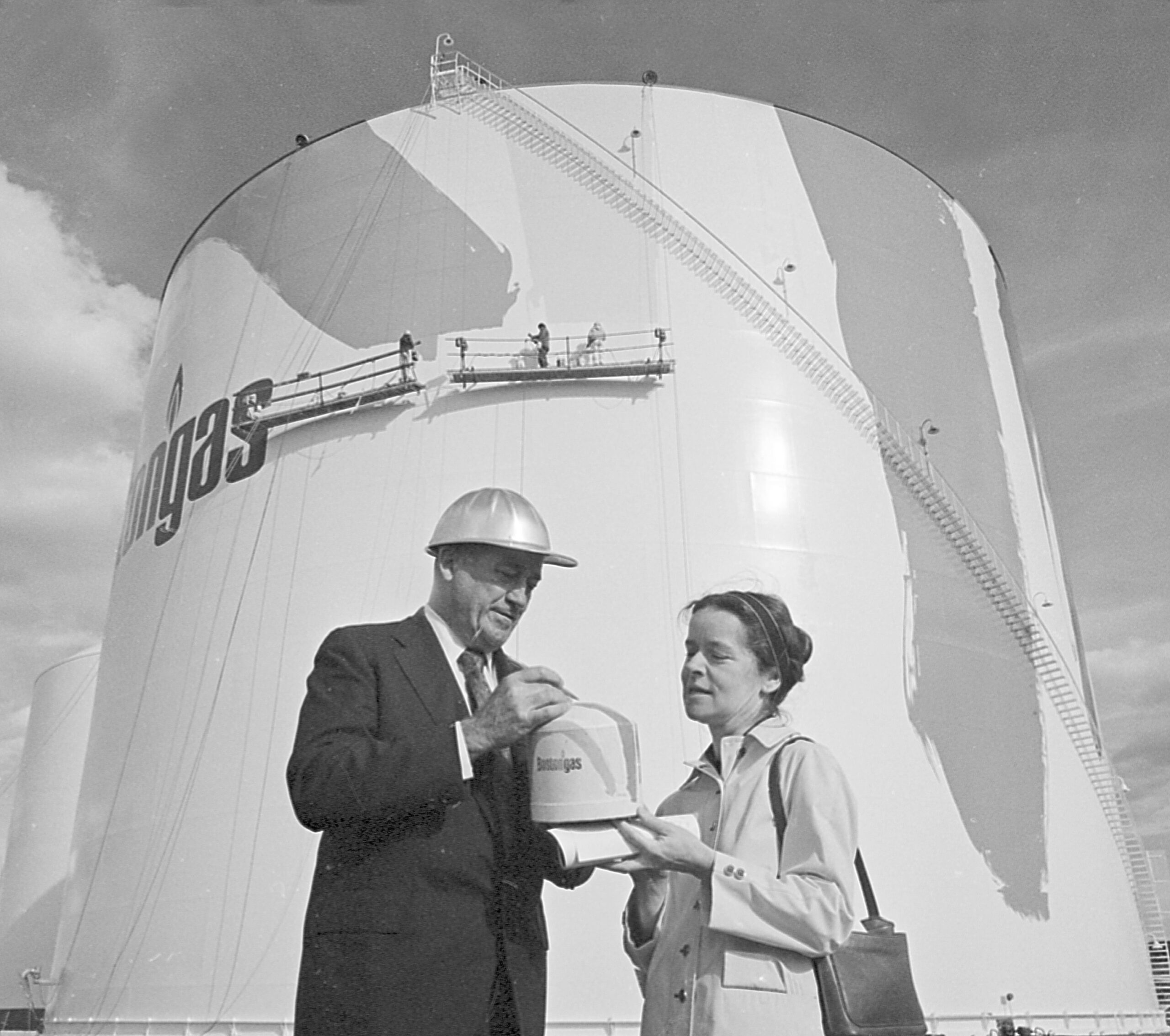
In daily visits to the gas tank in October 1971, Corita guided painters as they transferred her design from an eight-inch model to the 15-story tank. She worked closely with them on getting the exact shades of the colors she wanted. With her is Boston Gas construction manager Karl Kunberger.
October 19, 1971 photo courtesy of AP Images
During the tumultuous 1960s, silkscreen prints by a Los Angeles artist then known as Sister Mary Corita were widely exhibited. They expressed her deep commitment to social justice in an immediately recognizable style. Through bold colors and text, she conveyed her concerns about racism, poverty and war, and her belief in the human spirit.
In 1968, under pressure from church hierarchy, Corita left the Immaculate Heart of Mary Order and moved to Boston. Three years later, Boston Gas Company chairman Eli Goldston commissioned her to paint a mural on a gas tank at Commercial Point. Across the tank, she spread her vision of the rainbow described in the Book of Genesis as a covenant between God and man.
Initial public reaction was mixed. Many loved it, but Vietnam war veterans were angered by what appeared to be the silhouette of the bearded North Vietnamese leader Ho Chi Minh in the painted blue swash. Shortly before she died in 1986, Corita stated that while the profile had been unintended, she was not unhappy about it.
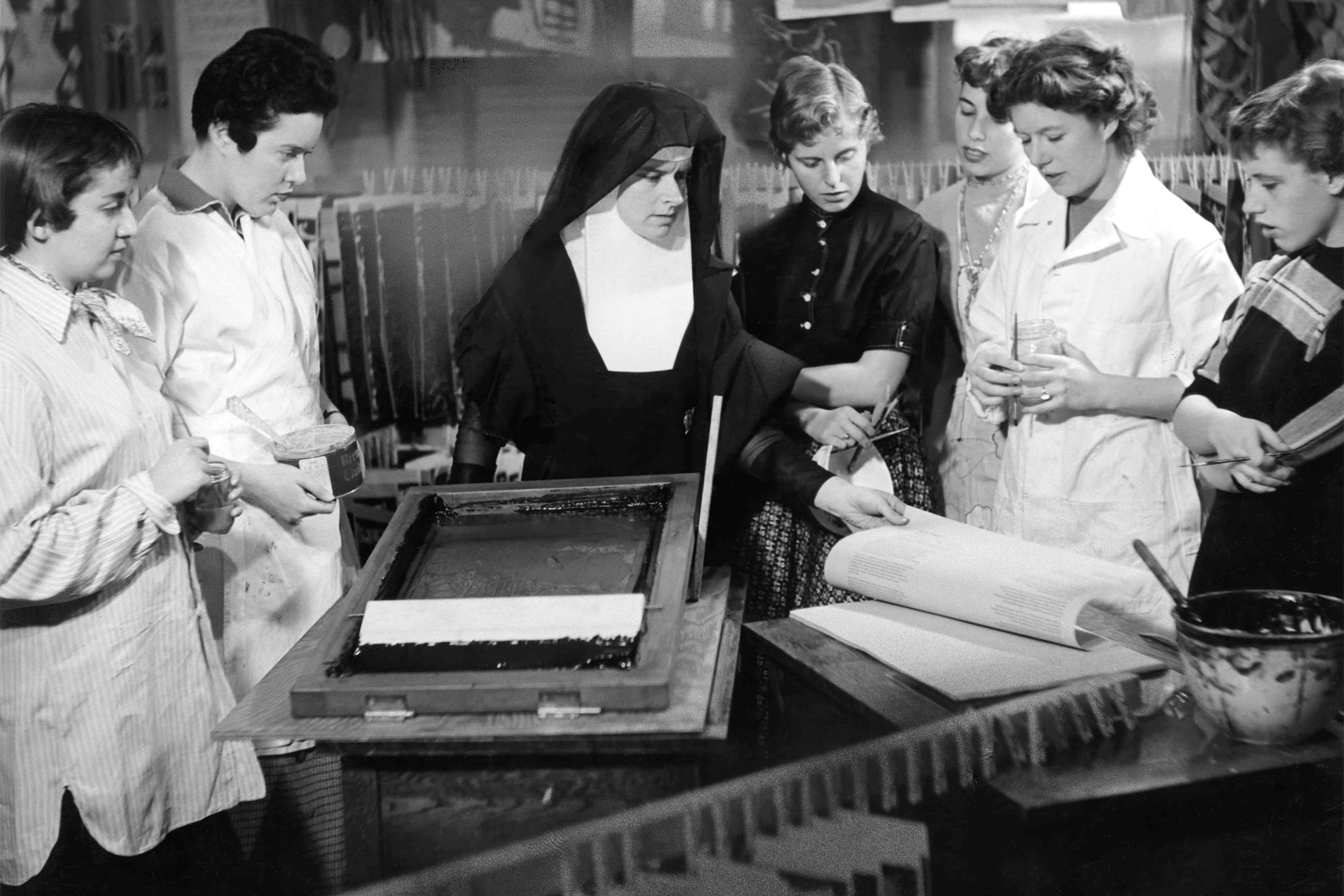
Corita always described herself as an educator. In this 1965 photo, she teaches students how to make silk screen prints. This was her favored medium as she could produce multiple copies of message-filled artworks for wide distribution.
Courtesy of Corita Art Center, Los Angeles
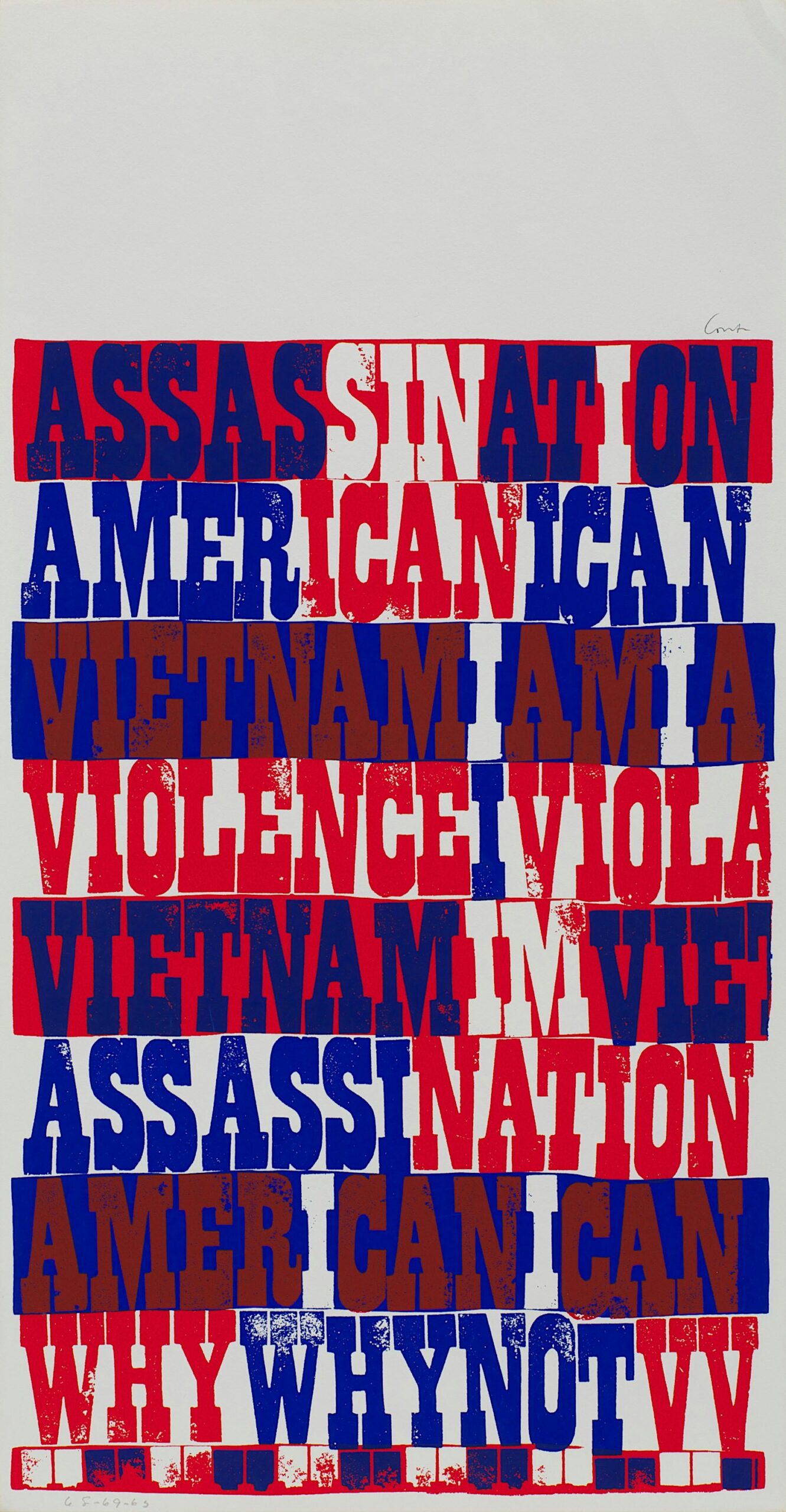
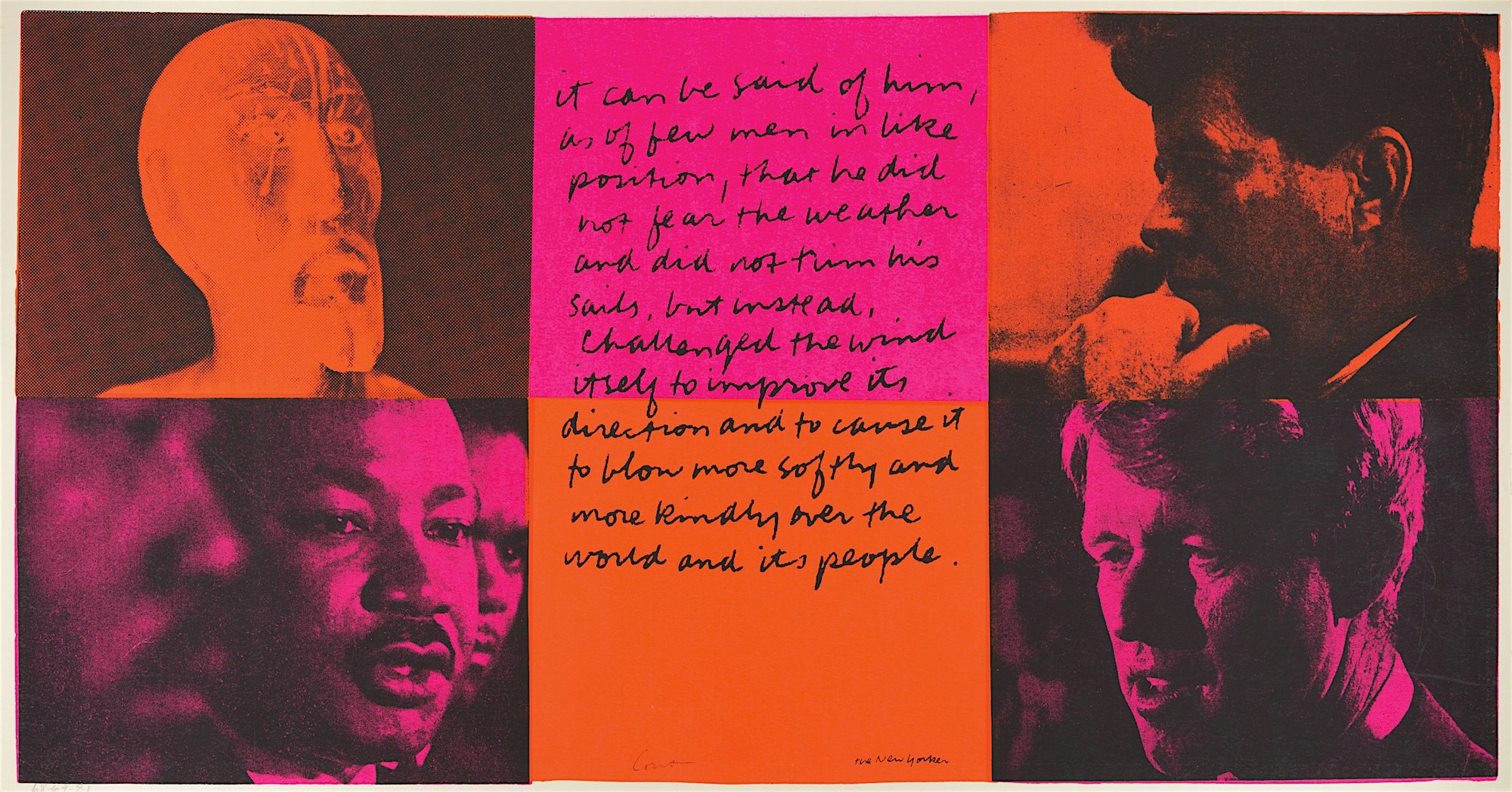
Corita Kent created more than 800 silk screen prints during her career. These two— american sampler and it can be said of them—were created in 1968 and 1969 when Corita had shifted to explicitly political themes. She often incorporated song lyrics, images from the media, even advertising slogans in her art.
Courtesy of Corita Art Center, Los Angeles
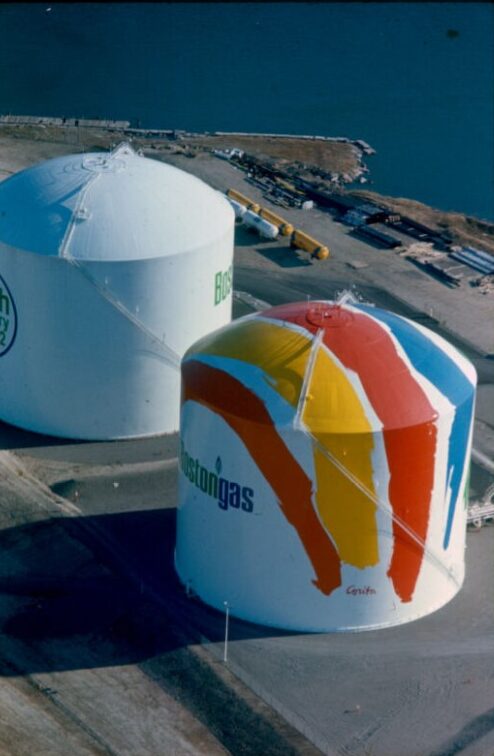
Originally, there were two tanks on Commercial Point. The one with Corita’s Rainbow Swash was decommissioned in 1992 and demolished. By then, her artwork had become such a beloved landmark that it was carefully copied on to the other tank under the close supervision of her friend and former student, Mickey Myers.
Courtesy of Boston Public Library, Spencer Grant Collection, 1971

In 1985 when Corita was commissioned to design a stamp for the U.S. Postal Service, she returned to the rainbow concept she had used on the gas tank. More than 700 million stamps were sold.
Sign Location
More …
Resources
Acknowledgments
- Friends of the Boston Harborwalk is deeply grateful to the George B. Henderson Foundation for funding the design, manufacture and installation of the signs at Columbia Point.
- Our gratitude to the Perkins School for the Blind Recording Studio and Thomasine Berg for their partnership in creating the audio files.
- Warm thanks to Nellie Scott, executive director and Olivian Cha, curator at the Corita Art Center for their warm welcome and enthusiastic support for this sign.